1
2
3
Damper Products
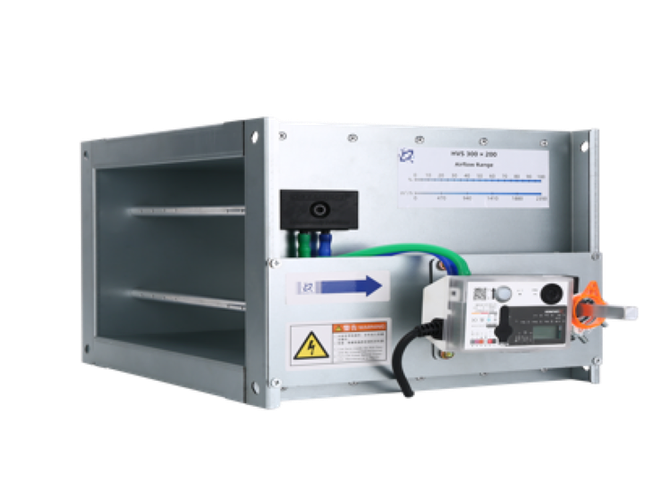
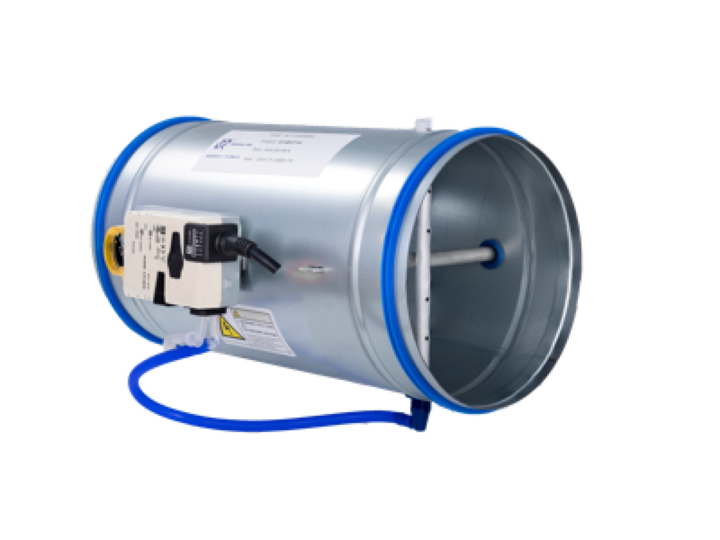
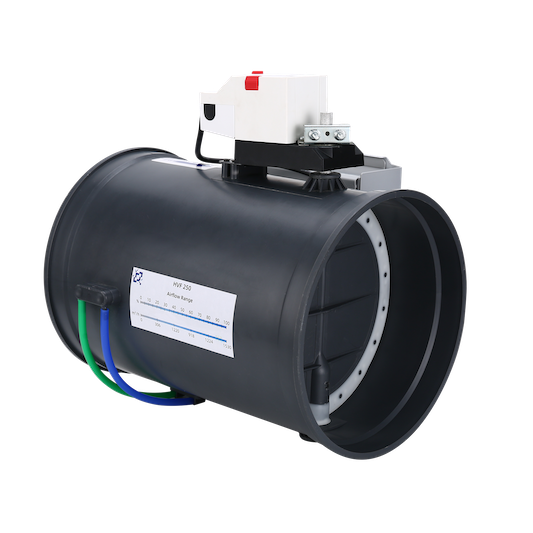
HVF Fume Hood VAV Damper
The HVF Fume Hood VAV Damper is a safety exhaust device designed for laboratory fume hoods. It automatically adjusts exhaust airflow according to sash height to meet face velocity requirements. It uses fast-response technology and safety interlock functions, providing reliable safety protection for laboratory personnel.
Product Features
- Designed for fume hood exhaust
- Excellent corrosion resistance
- Fast Response Control
- Emergency exhaust
- Energy-saving control with automatic sash system
| Duct Size Range | 200 ~ 315 mm |
|---|---|
| Airflow Range | 226 ~ 2660 m³/h |
| Face Velocity Control | 0.3 ~ 0.5 m/s ± 15% |
| Airflow Control Accuracy | ±3% |
| Response Time | 3 seconds |
| Operating Differential Pressure Range | 30 ~ 1000Pa |
| Control Signal | 0-10V / 4-20mA / Modbus RTU |
| Supporting Components | Options include sash position sensor, LCD control panel, occupancy sensor, and automatic sash system. |
Professional Design
Designed for laboratory fume hood exhaust with operator safety and emergency scenarios in mind.
Corrosion-resistant features
All parts in contact with corrosive exhaust air are made of PP for excellent corrosion resistance.
Fast response
Steady-state response time complies with ASHRAE 110 and DIN EN 14175-6, preventing hazardous gas escape.
Face Velocity Control
Typical fume hood face velocity is controlled at 0.3-0.5 m/s ±15%, balancing effective exhaust and energy savings.
Fail-safe
Multiple emergency scenarios are considered; once emergency mode is triggered, the system switches to maximum exhaust immediately.
Energy Management
Optional occupancy sensor or automatic sash system enables low-exhaust operation when the fume hood is unattended.
Before Installation
- Confirm that valve selection matches fume hood specifications
- Install according to valve airflow direction and reserve maintenance space
- Confirm installation positions for sash position sensor and control panel
- Confirm power supply and component wiring
Installation Steps
- Install the VAV damper in the exhaust duct
- Connect exhaust ducts and ensure sealing
- Install sash position sensor and control panel according to the manual
- Connect internal component wiring
- Connect power and signal cables
- Power-on test
Commissioning Points
- Set target face velocity parameters
- Calibrate sash position sensor
- Test airflow and face velocity at different sash heights
- Test emergency exhaust function
- Test fail-safe function
- Test energy-saving exhaust function
- Verify face velocity control using third-party instruments
Chemical Laboratories
Fume hood exhaust for chemical analysis laboratories to prevent chemical leakage.
Medical Laboratories
Fume hood exhaust systems for hospital laboratory and pathology departments.
Research Institutes
Fume hood exhaust for research institute laboratories to protect researchers.
Universities
Fume hood exhaust systems for university chemistry, biology, and medical laboratories.
Pharmaceutical Companies
Fume hood exhaust systems for pharmaceutical R&D and QC laboratories.